

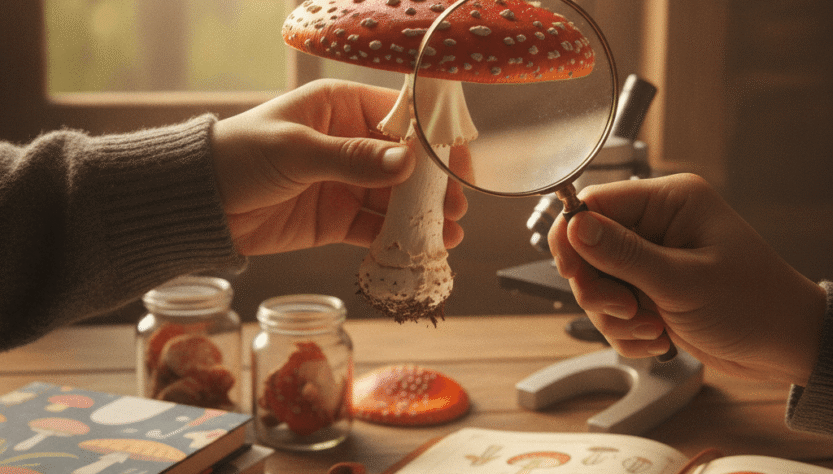
I have always found myself drawn to the wonders of the natural world. Among the countless species that captivate my interest, the mushroom stands out for its mysterious allure. There are so many kinds of mushrooms, and some carry deep stories and potent properties. One mushroom in particular often sparks great curiosity and discussion. It is the iconic Fly Agaric.
Many people recognize the Fly Agaric by its striking appearance, a bright red cap dotted with white flakes. This mushroom is not just pretty to look at but also holds a long history in human culture and folklore. Understanding this fungus goes beyond simply identifying it. It means diving into its biology, its place in ecosystems, and its sometimes complex relationship with humans throughout history.
So much misinformation floats around about fungi, so it feels important to gather solid facts. My goal here is to help you truly empower your knowledge of Fly Agaric Mushrooms. I want to share what I know about this captivating species, separating myth from scientific understanding. This way you can appreciate its natural beauty and significance with clear, informed eyes.
Understanding the Fly Agaric Mushroom’s Distinctive Features
The Fly Agaric, known scientifically as Amanita muscaria, is one of the most recognizable mushrooms in the world. Its appearance is truly unforgettable and often pops up in children’s books and fantasy art. I always feel a small thrill when I spot its vibrant colors against the forest floor.
Typically, the cap shows a brilliant red or sometimes an orangish-red hue. It is usually adorned with distinctive white or yellowish warts. These warts are actually remnants of a universal veil that covered the mushroom when it was very young. As the mushroom grows and the cap expands, this veil breaks apart, leaving those characteristic spots. I have seen them in various shades and densities, depending on the mushroom’s age and environmental factors.
Below the cap, the gills are pure white and crowded together. The stem, also white, often has a ring around its upper part. This ring is another remnant of the partial veil that protected the gills when the mushroom was immature. At the base of the stem, there is a bulbous volva. This volva has several concentric rings, like a series of collars. These features are critical for proper identification. They are not just pretty details but key biological markers that set it apart from other fungi.
This mushroom grows in diverse temperate and boreal regions throughout the Northern Hemisphere. It has also been introduced into some parts of the Southern Hemisphere. I have seen them flourish in pine and birch forests, but they also grow near spruce and fir trees. Their preference for these specific trees relates to their symbiotic relationship. This wide distribution means that many people have the chance to see this beautiful mushroom in the wild.
A Rich History of Folklore and Cultural Significance
The Fly Agaric mushroom has a history that is as colorful and unique as its cap. For centuries, it has woven itself into the fabric of human folklore, myths, and spiritual practices across different cultures. Its striking appearance made it stand out, and its properties gave it a special place in ancient traditions. I often think about the stories people told about it long ago.
In Siberia, indigenous peoples like the Koryaks and Chukchi have a long tradition of using Fly Agaric in shamanic rituals. They believed it could help them reach altered states of consciousness. It allowed them to communicate with spirits and gain insights. Shamans would often consume the mushroom to conduct healing ceremonies or foresee the future. This practice highlights how deeply integrated the mushroom was into their spiritual lives. It was not just a plant but a key to another world for them.
There are also tales connecting the Fly Agaric to Viking berserkers. These legendary warriors were said to enter a trance-like fury before battle. Some theories suggest they might have ingested *Amanita muscaria* to achieve this state. This idea is debated by historians, but it adds another layer to the mushroom’s intriguing past. Whether true or not, it shows how people attributed powerful, almost magical, qualities to this fungus. This type of folklore is common with many natural elements that have profound effects. You can learn more about its historical and mythical connections on Burlap and Blue, where they share fascinating insights into its deep roots in human history.
Perhaps one of the most widespread associations of the Fly Agaric is its link to modern Christmas imagery. Its red and white colors are thought to be the inspiration for Santa Claus’s suit. The mushroom also grows under pine trees, a common Christmas tree. Some theories suggest that tales of flying reindeer in Nordic folklore might stem from people observing animals acting strangely after eating the mushroom. Even without concrete proof, these connections show how the Fly Agaric has subtly influenced our modern cultural landscape. It is a humble mushroom with a surprisingly grand impact.
Identifying Amanita Muscaria Safely in the Wild
Identifying any mushroom in the wild requires careful attention to detail. This is especially true for the Fly Agaric because some of its relatives are highly toxic. I cannot stress enough the importance of absolute certainty when identifying fungi. Never rely on just one or two characteristics. Always consider the whole picture.
I always teach that the first rule is to never eat a wild mushroom unless you are 100% sure of its identity. This means consulting multiple field guides and perhaps even an experienced mycologist. Photos online can be misleading so hands-on experience is very valuable. When I go foraging, I always carry a reliable field guide and take my time.
Key Visual Cues for Identification
To identify the Fly Agaric specifically, look for its vivid red or orange-red cap, usually covered with white or yellowish wart-like scales. These scales can wash off in heavy rain so look for signs they were once there. I always check the underside of the cap for white gills that do not attach to the stem. The stem itself is white and stout, showing a skirt-like ring. This ring is also white or yellowish and can be quite striking.
The base of the stem is bulbous and encased in a series of white, flaky rings or scales, which form a cup-like structure called a volva. This layered volva is very distinct. If you are ever unsure, a spore print can provide further evidence. The Fly Agaric produces a white spore print. Collect a cap, place it on dark paper, and cover it for a few hours. The color of the spores can help distinguish it from other species. I find spore prints to be a helpful confirmation tool.
Habitat and Growing Conditions
The Fly Agaric forms a symbiotic relationship with certain trees. This is called a mycorrhizal relationship. It means the mushroom grows underground, connecting to the roots of trees like pine, spruce, fir, and birch. This connection helps both the tree and the fungus. I usually find these mushrooms in coniferous and mixed forests during late summer and autumn. They tend to prefer acidic soils. Knowing its preferred habitat can narrow down your search and aid in identification. Look for them growing on the ground, never on wood.
The Chemical Composition and Effects of Fly Agaric
When we talk about the Fly Agaric, it is important to understand its chemical makeup. This mushroom contains specific compounds that give it its psychoactive and toxic properties. I always emphasize that knowing these details is crucial for respectful and safe appreciation of the species. It is not something to be taken lightly.
The primary active compounds in *Amanita muscaria* are ibotenic acid and its decarboxylated derivative, muscimol. Ibotenic acid is a neurotoxin that can cause confusion, muscle twitching, and nausea. When ibotenic acid is ingested, a significant portion of it converts into muscimol in the body. Muscimol is the main psychoactive agent. It acts as a potent GABA-A receptor agonist, which means it affects the brain in ways similar to alcohol or sedatives. This effect is why people in ancient cultures might have sought it out for ritualistic purposes.
The effects of consuming Fly Agaric can vary greatly from person to person. They also depend on the amount consumed and the specific preparation. Symptoms can include disorientation, euphoria, drowsiness, visual distortions, and muscle spasms. Some people report feelings of increased strength or changes in perception of size and distance. These effects are unpredictable and can be very unpleasant. I have read many accounts of people experiencing extreme discomfort and fear after ingestion. This highlights the inherent risks.
It is important to remember that *Amanita muscaria* is considered poisonous. While deaths are rare, severe illness is a real possibility. Symptoms often include severe nausea, vomiting, and dizziness. The toxicity levels can also vary depending on geographic location and the season. This variability adds another layer of risk to consuming this mushroom. For me, observing the Fly Agaric in its natural habitat is enough. I find its beauty and history far more compelling than any potential effects. I strongly advise against any form of consumption.
Responsible Interaction and Ethical Considerations
As someone who loves the natural world, I feel a strong responsibility to advocate for ethical interaction with all species, including the Fly Agaric. This mushroom, despite its captivating history and appearance, is not one to be consumed. Instead, our interaction should focus on observation, education, and respect for its role in the ecosystem. I believe this approach empowers our knowledge without causing harm.
When I encounter a Fly Agaric in the forest, I simply admire it. I take photos, observe its unique features, and reflect on its deep cultural ties. This kind of appreciation allows us to learn without risk. It lets us connect with nature in a mindful way. Picking the mushroom, especially for consumption, is not only dangerous but also disrupts the local environment. Every organism has a purpose and a place.
We should avoid disturbing mushrooms in their natural habitat. Picking them removes spores that could lead to new growth. It also removes a potential food source for wildlife. The mushroom’s presence indicates a healthy mycorrhizal relationship with nearby trees. This relationship is vital for the health of the forest. I always leave them where they are so others can also experience their beauty. This also ensures their continued ecological function.
Sharing knowledge responsibly is another key ethical consideration. If you talk about Fly Agaric, always stress the importance of non-consumption due to its toxic nature. Explain its historical context clearly but never endorse its use. We should promote informed curiosity and scientific understanding over risky experimentation. Our goal is to empower ourselves and others with knowledge, not to encourage unsafe practices.
Empower Your Knowledge of Fly Agaric Mushrooms and Beyond
We have journeyed through the fascinating world of the Fly Agaric mushroom, exploring its vivid appearance, its deep historical roots, and its complex chemistry. I hope that by sharing this information, I have helped to empower your knowledge of Fly Agaric Mushrooms. We discussed how its striking red cap with white spots makes it an unmistakable sight in many forests worldwide. We also covered its significant role in ancient folklore and its surprising influence on modern cultural symbols.
I have emphasized the crucial importance of accurate identification and the dangers associated with its consumption. The compounds within, like ibotenic acid and muscimol, can lead to unpredictable and unpleasant effects. Our discussion highlighted the need for responsible and ethical interaction with this powerful natural entity. This means observing it in its habitat, appreciating its beauty, and leaving it undisturbed for future growth and ecological balance. My personal experience reinforces the idea that true appreciation comes from understanding and respect.
Learning about the Fly Agaric is a prime example of how empowering our knowledge of the natural world enriches our lives. It allows us to see beyond surface appearances and connect with the intricate tapestry of life around us. I encourage you to continue this journey of discovery with an open mind and a commitment to safety. Take the time to learn about other natural phenomena that intrigue you. Observe them with care. Read from reliable sources. This way, you can build a deeper appreciation for the planet we all share.